



Understanding Color Consistency in Print
Color consistency is crucial in the printing industry. It ensures that every print job matches the intended color and design. This consistency is vital for maintaining brand integrity.
Achieving color consistency can be challenging. Different devices and substrates can alter color perception. This makes color management a complex task.
Print shop owners often struggle with maintaining color accuracy. Inconsistent colors can lead to customer dissatisfaction. This can ultimately affect a business’s reputation and profitability, as reprints can be costly.
Selecting the right tools is essential for color control. With numerous options available, making informed decisions is key. This helps in achieving reliable and cost-effective solutions.
Understanding color standards and techniques is important. It aids in producing high-quality prints consistently. This article will guide you through the essentials of color consistency in print.
What Is Color Consistency and Why Does It Matter?
Color consistency refers to the uniform appearance of colors across various print jobs and devices. It is critical in branding, ensuring that a company’s visual elements remain recognizable and uniform. The psychology behind color in marketing underscores its importance for immediate brand recall and trust.
Achieving color consistency is not just about aesthetics. It directly influences customer satisfaction. Customers expect the colors they see on a screen to match the final printed product. This expectation highlights the need for precise color control across all production stages.
Several factors can affect color consistency:
- Differences in substrates and inks
- Variations in print technology and devices
- Environmental factors, like light and humidity
Inconsistent color output can lead to wasted materials and increased costs. It becomes essential for printing businesses to invest in effective color management practices. Ensuring consistent color across all customer print jobs helps build a strong brand identity. It also boosts consumer confidence in the product or service offered.
The Role of Color Standards and Color Management
Color standards provide a benchmark for achieving predictable color output. These standards, such as ISO standards, ensure uniformity in production. They are vital for maintaining brand consistency across various print media.
Color management systems play a crucial role in adhering to these standards. They involve software tools and practices designed to control color output across devices. Implementing these systems can significantly reduce discrepancies and ensure consistent color reproduction.
Several aspects of color standards and management include:
- Defining color profiles for devices
- Calibrating monitors and printers
- Utilizing ICC profiles for accurate color representation
Adhering to established color standards helps maintain high color quality. This consistency is critical in producing reliable prints, ensuring customer satisfaction, and protecting your brand image. By integrating robust color management systems, companies can effectively achieve color accuracy and efficiency.
Achieving Color Accuracy Across Devices and Substrates
Achieving color accuracy across various devices requires precise calibration and profiling. Each device, from monitors to printers, represents colors differently. The key is to align these devices using standardized profiles.
Color profiles serve as a bridge for matching colors between devices. These profiles are standardized data sets allowing devices to communicate effectively about color. They help maintain color consistency in different work environments. By using profiles, you ensure colors remain true from screen to print.
A significant challenge lies in printing consistent color on diverse substrates. Each substrate interacts differently with ink, affecting color outcome. Understanding these interactions is crucial for accurate color reproduction.
- Flexible packaging, such as films, laminates, and pouches can develop a grain during the extrusion process which can impact color measurement. However, the SpectroDens is able to measure a large range of samples, as it is equipped with polarization filters that make sure the reflections from different materials do not impact the measurement.
- Rigid packaging, such as bottles, containers, and boxes may be made of corrugated materials, such as cardboard. This type of material is going to absorb more light, meaning that a color may appear differently on cardboard than it would on paper. It is crucial to use a spectrophotometer to determine the color differential, and what changes need to be made to fix any notable color differences.
- Finally, for packaging such as labels and sleeves, it is important to look for a spectrophotometer that is accurate and reliable. These labels may have intricate designs that require attention to detail that the human eye may not be capable of.
To enhance color accuracy, consider the following strategies:
- Regularly calibrate all devices involved in the workflow
- Use ICC profiles tailored for each device and substrate
- Adjust for specific substrate characteristics
Managing color across devices and substrates demands attention to detail. Consistently applying these techniques minimizes color discrepancies. Ultimately, a well-managed color workflow leads to satisfied customers and consistent brand representation across all media types.
Tools and Techniques for Color Control and Matching
Color control in printing relies heavily on specialized tools and techniques. These tools help maintain consistency and ensure the accurate transfer of colors.
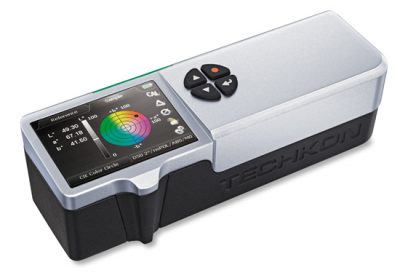
Spectrophotometers are vital for precise color measurement. They assess color with high accuracy, guiding adjustments in the printing process. Techkon’s spectrophotometers include:
- SpectroDens: A combined color spectrophotometer and color densitometer to help control process, spot, Pantone®, or other brand colors.
- SpectroDrive: A press-side, automated, scanning solution for offset presses. This spectrophotometer runs on a precision track that can be ordered in lengths up to 81 inches.
- SpectroJet: A lower-cost solution when compared with the SpectroDrive. This device can be pushed along a precision track but can also be used as a handheld device for on-the-fly spot check measurements.
- SpectroVision: 2025 FTA Technical Innovation Award winner. Measures color at full production print speeds. Designed for flexo, gravure, or digital presses.
Understanding and using the right tools and methods improve the overall quality of printed materials. Consistent color enhances both the visual and brand appeal, ultimately leading to increased customer satisfaction. Investing in proper color control tools offers long-term benefits in quality and efficiency.
Understanding MacAdam Ellipses and Color Quality
MacAdam ellipses represent areas where colors appear indistinguishable to the human eye. They are an essential concept for evaluating color quality.
These ellipses demonstrate the idea that not all color differences are noticeable equally. Some variations can be perceived, while others blend seamlessly. Because the human eye may not be able to detect subtle color differences, it is important to lean on tools such as spectrophotometers.
Key aspects of MacAdam ellipses in color quality include:
- Explaining perceived color differences
- Informing tolerances in quality control systems
- Guiding decisions in printing and manufacturing settings
Understanding these ellipses aids in achieving accurate and reliable color reproduction. This ensures each print meets the expected standards without visible discrepancies.
By considering MacAdam ellipses, printers can refine their processes. They can focus on crucial areas where visual differences matter most. This enhances overall color consistency across varied applications.
Best Practices for Printing Consistent Color on a Wide Range of Substrates
Printing on various substrates presents unique challenges in maintaining color consistency. Each material may react differently to inks and finishes. It’s essential to adjust your approach for each substrate to ensure vibrant, uniform colors.
First, calibrate your equipment regularly to accommodate substrate variations. Calibration aligns your printer’s output with color standards. This step is crucial in maintaining consistent results.
Additionally, selecting suitable ink formulations for specific substrates can significantly impact color quality. With these different substrates, ink toning on press can be a challenge, but with Techkon’s ChromaQA with SmartInk and PressLink software, ink toning is made easy.
Techkon’s ChromaQA with SmartInk allows operators to tone ink with just a few clicks of a button. Operators simply define their specific base ink sets and substrates, which is a one-time process. After this, AI driven algorithms use the given information to correct ink in order to get within a certain Delta E tolerance. Techkon’s PressLink has ink pre-setting optimization capabilities which allows the software to calculate ink profiles before a job starts. The PressLink software is able to keep track of how each job starts and finishes, which then allows it to re-align the algorithm when needed.
Key practices include:
- Frequent calibration of equipment
- Selecting appropriate ink formulations
- Conducting test prints for quality assurance
Routine test prints help identify issues early. They allow for corrections before committing to a full production run. Use these tests to verify that colors match the desired specifications.
Adopting these practices ensures effective color control. They provide reliable results across different printing scenarios. This leads to increased customer satisfaction and enhances brand consistency.
Conclusion: Building Brand Consistency Through Reliable Color
In today’s competitive market, brand consistency is paramount. Reliable color management plays a crucial role in achieving this. By ensuring consistent color across all print materials, businesses can reinforce brand identity.
Effective color management involves using the right tools and techniques. It includes understanding color standards and conducting regular calibrations. These practices help maintain color accuracy and control across various devices and substrates.
Ultimately, investing in quality color management solutions enhances print quality. This leads to improved customer satisfaction and loyalty. With consistent color, you can build trust in your brand while maintaining cost-effective operations. Achieving color consistency in print is not just about aesthetics; it’s a vital component of successful business strategy.