



Understanding Spectrophotometers in Print Production
In the world of print production, color accuracy is paramount. Challenges can arise, however, as achieving consistent color across various print jobs can be difficult. This is where spectrophotometers in print production come in. These instruments are vital for ensuring precise color measurement and quality control.
For printers looking to enhance customer satisfaction, selecting the right spectrophotometer is crucial. It can significantly impact productivity and cost-effectiveness. Understanding the different types and their applications is key to making informed decisions.
In this article, we will look into the role of spectrophotometers in print production. We will discuss their benefits, types, and how to choose the right one for your needs.
What Is a Spectrophotometer and Why Is It Essential in Print?
A spectrophotometer is a device used to measure Delta E, or the difference between 2 colors. It’s a key instrument in print production for accurate color management. By using it, printers can ensure that the colors in their final products match the intended samples or standards.
In print, maintaining color consistency across different jobs or locations is critical, and spectrophotometers play a vital role by providing the objective color measurements needed to do so. These devices are especially crucial in the print packaging industry where brand colors need to be precise.
Here are some primary reasons why spectrophotometers are essential in print:
- Consistency: Ensures uniform color in every print run.
- Accuracy: Provides precise color readings for accurate reproduction.
- Quality Control: Helps maintain high standards across print jobs.
Spectrophotometers, therefore, are not optional; they are necessary for any print operation seeking excellence.
How Spectrophotometers Work: The Science Behind Print Color Measurement
The spectrophotometer works by utilizing a white light source (LED or incandescent) that illuminates a desired measurement location. The device then reflects the light which is separated by either a diffraction grating or narrow band filters. This data is then analyzed to determine the precise color values and Delta E. This functionality makes color measurement indispensable in quality control processes.
A typical spectrophotometer collects data in a systematic way, ensuring consistency. Here’s how they generally operate:
- Light Source: Illuminates the printed sample.
- Optics: Focus the light on the sensor.
- Detector: Measures the reflected light.
These metrics are crucial for maintaining the integrity of the colors printed. By leveraging this data, print operators can ensure uniformity.
Types of Spectrophotometers for Print and Packaging
Spectrophotometers come in various forms, each designed for specific print environments and workflows. Understanding these types helps in making informed purchasing decisions.
Handheld Spectrophotometers are versatile tools that provide flexibility. They’re perfect for spot-checking prints directly on the production floor. Their portability ensures immediate feedback, aiding in swift quality checks. Techkon’s handheld spectrophotometers include:
- SpectroDens: A combined color spectrophotometer and color densitometer to help control process, spot, Pantone®, or other brand colors.
- Dens: A color densitometer that indicates densities, dot area, and gray balance.
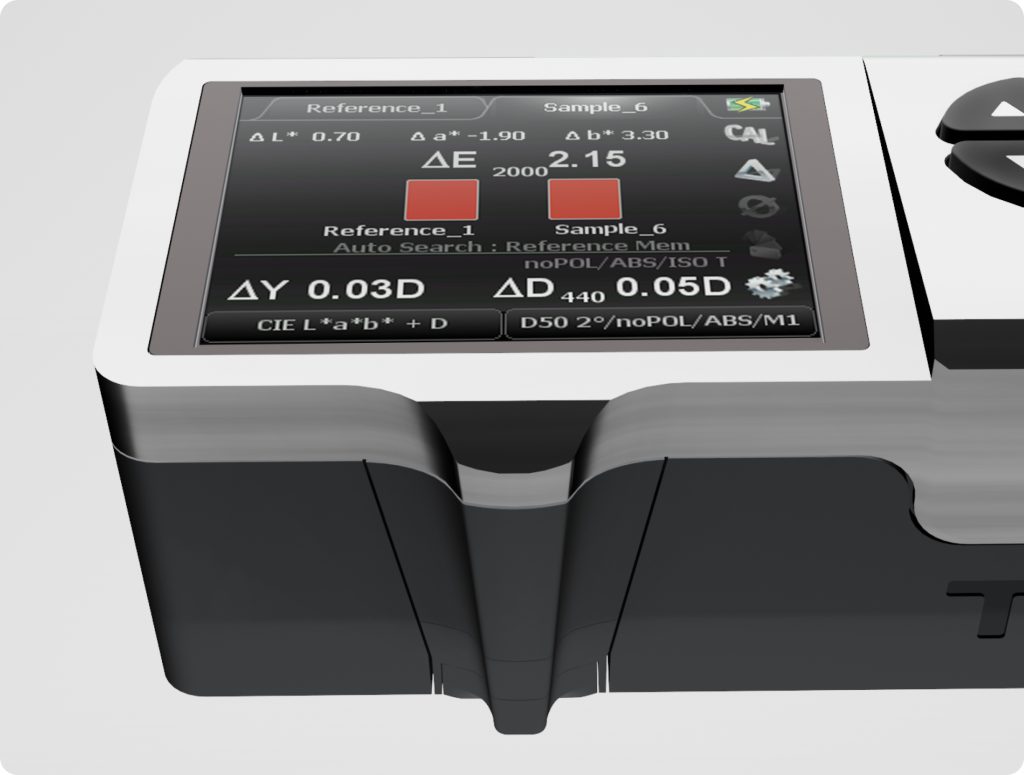
Scanning Spectrophotometers offer unmatched precision. These spectrophotometers are color management devices that are often stationary and are perfect for production and manufacturing style settings. Techkon’s scanning spectrophotometers include:
- SpectroDrive: A press-side, automated, scanning solution for offset presses. This spectrophotometer runs on a precision track that can be ordered in lengths up to 81 inches.
- SpectroJet: A lower-cost solution when compared with the SpectroDrive. This device can be pushed along a precision track but can also be used as a handheld device for on-the-fly spot check measurements.
Inline Spectrophotometers are integrated into printing presses for real-time monitoring. They continuously assess color during the print process, allowing instant adjustments. This ensures consistent quality across extensive print runs. Techkon’s inline spectrophotometers include:
- SpectroVision: 2025 FTA Technical Innovation Award winner. Measures color at full production print speeds. Designed for flexo, gravure, or digital presses.
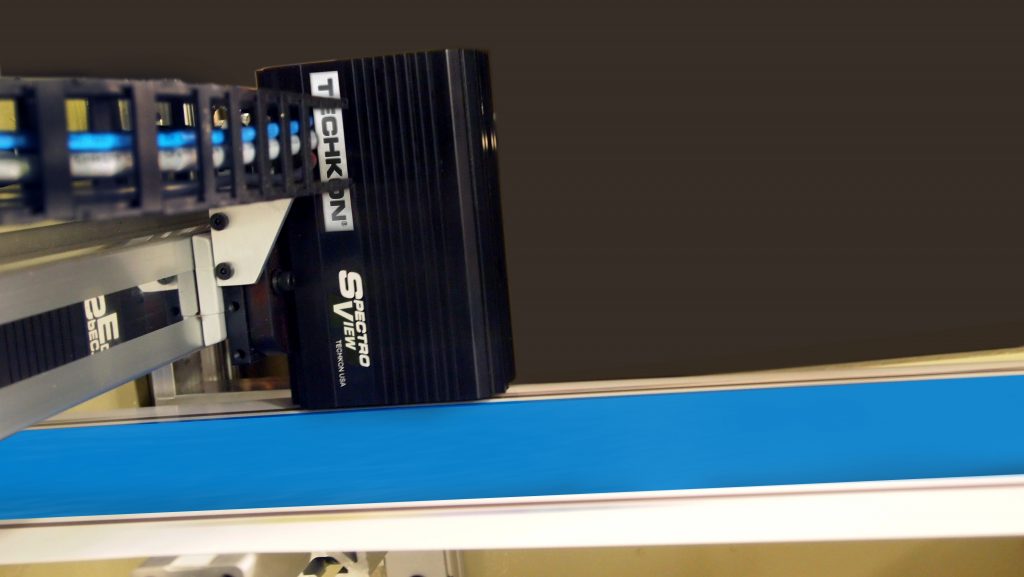
- SpectroView: Measures color in real-time and alerts operator before color drifts out-of-tolerance. Intended for industrial manufacturing settings.
- SpectroEdge: Includes an ES7500 spectrophotometer. Intended for manufacturers of printing presses and other machinery. Designed to be integrated into digital presses.
Understanding each type’s capabilities can significantly enhance print quality control. Choose a model that aligns with your operational needs for optimal results.
Key Benefits of Using a Spectrophotometer for Print Production
Spectrophotometers in print production are important tools when looking to achieve top tier quality. They play a critical role in ensuring color accuracy and consistency across all prints. This is vital for maintaining brand standards, especially in print packaging where precision is non-negotiable.
Investing in a spectrophotometer often leads to notable cost savings. By minimizing waste and reducing the need for reprints, they help optimize resource use. Accurate color measurement means less ink and substrate consumption, lowering overall production costs.
The use of spectrophotometers enhances customer satisfaction through precise color matching. In high-volume print environments, these devices provide a competitive edge by ensuring that every print meets the desired quality standards.
Key benefits include:
- Enhanced color accuracy and consistency
- Reduced waste and reprints
- Improved customer satisfaction through precise color matching
Choosing the Right Spectrophotometer: Factors to Consider
Selecting the ideal spectrophotometer for your printing workflow involves understanding your operational needs. Spectrophotometers have the capability to measure color differences on many types of samples, and it is important to find a device that fits your needs.
- Flexible packaging, such as films, laminates, and pouches can develop a grain during the extrusion process which can impact color measurement. However, the SpectroDens is able to measure any type of sample, as it is equipped with polarization filters that make sure the reflections from different materials do not impact the measurement.
- Rigid packaging, such as bottles, containers, and boxes may be made of corrugated materials, such as cardboard. This type of material is going to absorb more light, meaning that a color may appear differently on cardboard than it would on paper. It is crucial to use a spectrophotometer to determine the color differential, and what changes need to be made to fix any notable color differences.
- Finally, for packaging such as labels and sleeves, it is important to look for a spectrophotometer that is accurate and reliable. These labels may have intricate designs that require attention to detail that the human eye may not be capable of.
Precision requirements must also guide your decision. Different models offer various levels of accuracy and feature sets. For instance, the SpectroView is a closed-loop system that will automatically adjust ink to meet color standards.
Budget is another crucial factor. While these devices can be expensive, there are some budget friendly options. For example, Techkon’s SpectroJet is a lower-cost solution when compared with the SpectroDrive. This device utilizes Techkon’s ExPresso software which is a cost-efficient closed-loop system.
Overall, key considerations include:
- Material compatibility
- Required precision level
- Budget and long-term cost benefits
Best Practices for Integrating Spectrophotometers into Your Workflow
Incorporating a spectrophotometer into your workflow requires careful planning and training. It’s crucial to ensure that staff are trained on both its operation and the importance of accurate color measurement. Techkon offers hands-on training to ensure that all press operators and staff feel comfortable implementing the spectrophotometer into their workflow. This step is vital for maximizing the benefits of the tool and maintaining high-quality outputs.
Regular calibration of the spectrophotometer is essential. Ensure that it is routinely calibrated according to manufacturer specifications to guarantee accuracy. Failing to do so can lead to inconsistent results, counteracting the tool’s purpose. Keeping equipment in optimal condition prevents costly errors. Techkon products must undergo routine calibration, which is detailed below:
- Field Calibration: For scanning and handheld devices, this calibration can be completed as needed by placing the device on the charger, as a white calibration tile is integrated into the charging plate. For inline devices, this field calibration is automatic and will be done as needed by the device.
- Factory Recertification: This recertification is free with Techkon’s Planned Maintenance Program (PMP). Handheld and scanning devices will be sent to Techkon USA in Danvers, MA. Users will be sent a loaner device during this routine calibration. For inline devices, a technician will be sent on-site to replace the spectrophotometer with a loaner device while the original is sent to Danvers, MA to be recertified.
Maximizing ROI: Cost Savings and Quality Control
Investing in a spectrophotometer can lead to notable cost savings and quality improvement. By ensuring precise color management, costly reprints and wasted materials can be minimized. This contributes to reduced operational costs, benefiting both large and small print operations.
Moreover, maintaining consistent print quality enhances customer satisfaction. Customers expect accuracy and reliability, and meeting these expectations can lead to repeat business. Consider these cost-saving and quality control strategies:
- Minimize reprints by ensuring color accuracy.
- Reduce waste with precise ink management.
- Enhance brand reputation through consistent quality.
These strategies can not only cut costs but also improve your competitive edge in the market.
Conclusion: The Future of Print Color Measurement
Spectrophotometers in print production are revolutionizing how we ensure color accuracy in print. Their evolving technologies promise even greater precision. As digital printing progresses, the demand for cutting-edge color management tools will rise.
Investing in a color management system today prepares your business for tomorrow’s challenges. Staying ahead in color measurement enhances operational efficiencies and supports sustainable growth.